
Disclosure: As an Amazon Associate I earn from qualifying purchases. How this site works
Resin vs Filament (FDM)
Different tools for different jobs.
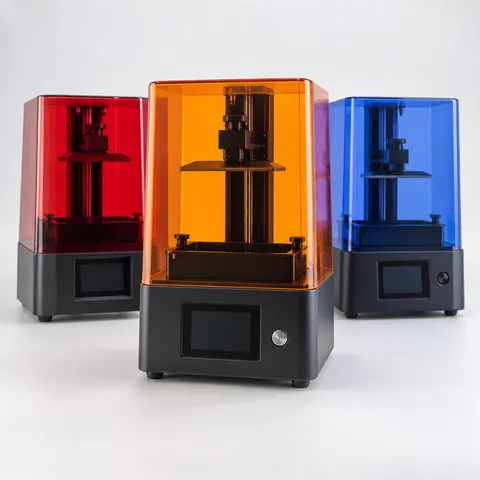 Entry-level MSLA resin printers
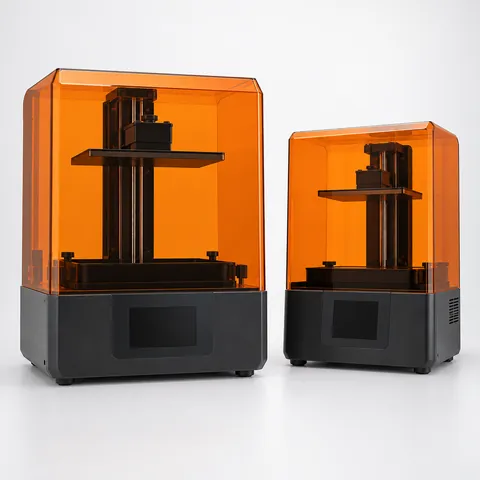 Large-format resin printers
 Wash-and-cure stations
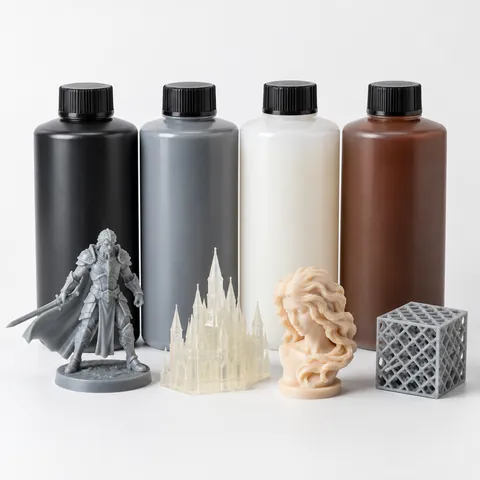 3D printing resins
Compared
| Resin | Filament | |
|---|---|---|
| Detail | Very fine | Good |
| Surface | Smooth | Visible layer lines |
| Part size | Usually smaller | Often larger |
| Post-processing | Wash, cure, support removal | Support removal |
| Safety needs | Gloves, ventilation, disposal | Ventilation for some plastics |
Choose resin if…
- You print miniatures, jewellery or small detailed models
- Surface finish matters more than size
Browse entry-level resin printers.
When is an FDM printer the better choice?
Choose an FDM printer when the part needs to be big, inexpensive to make, or useful around the house or workshop. FDM printers use spools of thermoplastic filament, so they are a natural fit for brackets, organizers, tool holders, cosplay pieces, large prototypes, and simple replacement parts where fine skin texture is not the main goal.
- You want larger prints without splitting the model into many pieces.
- You expect to print often and want a simpler daily workflow.
- You need functional parts that can tolerate handling, screws, clips, or light outdoor use when the right filament is chosen.
- You do not want to handle liquid resin or set up a wash-and-cure process.
- You are learning 3D printing and want easier material storage, cleanup, and troubleshooting.
FDM is not automatically stronger than resin in every case. Strength depends on the filament, resin type, model shape, print settings, and the direction the force is applied. Still, for practical parts, FDM usually gives you more material choices and a more forgiving process. Common filament materials can be selected for stiffness, heat resistance, flexibility, or toughness, while standard resins are often chosen for detail first.
How much space, mess, and ventilation do you need?
The biggest practical difference is not the printer itself. It is the workspace around it. A resin printer needs a controlled area for uncured resin, disposable wipes or paper towels, gloves, a scraper, a washing container or station, curing light, and waste handling. FDM needs space for the printer, filament storage, and occasional cleanup of failed prints or plastic strands.
| Setup question | Resin printer | FDM printer |
|---|---|---|
| Can it sit on a desk in a living area? | Not ideal because uncured resin and cleaning liquids need separation from daily surfaces. | Often possible, but noise, smell from some plastics, and heat still matter. |
| What cleanup is normal? | Drain or wipe the vat when changing resin, wash prints, cure prints, and clean tools that touched resin. | Remove the finished print, trim supports if used, and clear loose filament from the bed or nozzle area. |
| What safety gear is typical? | Nitrile gloves, eye protection, ventilation, and a plan for curing contaminated waste before disposal. | Basic ventilation, caution around hot parts, and extra care with higher-temperature or odor-producing plastics. |
| What extra equipment is helpful? | A wash-and-cure station, silicone mats, funnels, filters, spare gloves, and replacement release film. | Filament storage bags or boxes, basic tools, spare nozzles, and bed adhesion supplies. |
If you choose resin, plan the whole workflow before you buy the printer. Decide where wet prints will drip, where tools will sit, how you will cure parts, and how you will keep pets and children away from uncured material. A dedicated wash-and-cure station is not required for every user, but it can make the process more consistent and less messy.
Which printer is better for miniatures, helmets, terrain, and functional parts?
Match the printer type to the object you make most often, not to a single impressive demo print. Both technologies can make many shapes, but each one has a comfort zone.
Miniatures and small display models
Resin is usually the better choice for miniatures, busts, tabletop figures, jewelry patterns, dental-style models, and small parts with engraved or raised detail. The smooth surface reduces visible layer texture, so priming and painting can start with less sanding. The trade-off is that thin resin features can be brittle if the resin is not chosen for durability.
Cosplay helmets, props, and large terrain
FDM is usually more practical for helmets, armor pieces, large terrain, wall art, and props that will be sanded, filled, and painted. The prints may show layer lines, but the build volume is often more convenient and the material cost per large object is usually easier to live with. Resin can make highly detailed prop pieces, but large resin prints add weight, cost, cleanup, and more chances for suction-related failures.
Jigs, brackets, enclosures, and replacement parts
FDM is often the first choice for functional shop and household parts. It is easier to add thicker walls, stronger infill, and screw bosses without making the part too expensive or difficult to clean. Resin can work well for small precise fixtures, knobs, cases, and adapters, especially if you choose a tougher engineering-style resin, but standard resin is not the best default for parts that will be dropped, flexed, or loaded repeatedly.
- Pick resin when fine surface detail is the deciding factor.
- Pick FDM when size, toughness, and low-mess repeat printing matter more.
- If you make both miniatures and practical parts, expect to want both printer types eventually.
- If you can only buy one, choose based on the prints you will make every week, not the rare project you might attempt later.
What should beginners check before buying?
Before buying either printer type, look past the headline build volume and resolution claims. A good first printer is the one you can operate, maintain, and troubleshoot in your actual space.
- Measure the available space. Include room for the open lid or gantry movement, tools, finished parts, and a safe cleaning area.
- Check material availability. Make sure the resin or filament type you want is easy to reorder and has clear handling instructions.
- Look at replacement parts. For resin, release films, screens, vats, and build plates are wear items or common accessories. For FDM, nozzles, build surfaces, belts, and hotend parts matter.
- Read the slicing workflow. Resin supports, hollowing, drain holes, and exposure settings are different from FDM bed leveling, temperatures, infill, and retraction.
- Decide how much post-processing you will accept. Resin parts must be washed and cured. FDM parts may need support removal, sanding, or seam cleanup depending on the model.
- Consider the people and pets around the printer. Resin needs stricter separation from shared spaces. FDM still has hot surfaces and moving parts.
For resin shoppers, the most important buying split is small-detail printing versus large-format printing. A compact machine is easier to place and can be enough for miniatures and jewelry-scale work. A larger resin printer gives you more room for statues and multi-part projects, but it also uses more resin per filled vat and requires more careful handling of bigger wet prints. If detail work is your main goal, start by comparing entry-level resin printers. If you already know you need bigger one-piece models, compare large-format resin printers instead.
How do ongoing costs and maintenance differ?
The purchase price is only one part of the decision. Ongoing supplies and maintenance shape the long-term experience. Resin printing commonly uses resin, gloves, cleaning liquid, filters, paper towels or wipes, replacement release film, and occasional screen or vat parts. FDM printing uses filament, nozzles, build surface supplies, and sometimes drying or storage accessories for moisture-sensitive materials.
Resin failures can feel more expensive because a failed print may leave cured pieces stuck to the release film or floating in the vat. You need to filter the resin, inspect the film, and clean carefully before trying again. FDM failures can waste time and filament, but cleanup is often as simple as removing a plastic blob or restarting after fixing bed adhesion.
Maintenance is also different. Resin printers need a clean optical path, an undamaged release film, a level build plate, and a vat free of cured debris. FDM printers need a clean nozzle, a stable bed surface, correct belt tension, and a filament path that feeds smoothly. Neither type is maintenance-free, but the mess and safety steps are very different.
Frequently asked questions
Is resin 3D printing harder than FDM?
Resin printing is not necessarily harder to learn, but it has more cleanup and safety steps. You must handle uncured resin, wash the part, cure it, and manage contaminated waste. FDM usually has more mechanical tuning, but the day-to-day material handling is simpler.
Are resin prints stronger than filament prints?
Not as a general rule. Standard resin can capture fine detail but may be brittle compared with many filament prints. Tough or flexible resins can improve durability, while filament strength depends heavily on the material, print orientation, wall thickness, and infill.
Do resin printers smell more than FDM printers?
Many resins have a noticeable odor, and odor is not the only safety concern. Resin printing should be done with ventilation and skin protection according to the resin maker's safety instructions. FDM odor varies by filament type, but ventilation is still a good idea, especially for materials that print hotter or smell stronger.
Can one printer do both resin and filament printing?
A standard consumer printer is built for one process or the other. Resin printers cure liquid resin with light, while FDM printers melt and place plastic filament. If you need both ultra-fine detail and large practical parts, owning one of each is more realistic than trying to make one machine do everything.
Which is better for a first 3D printer?
Choose FDM first if you want the simplest general-purpose starting point for large parts, tools, and household prints. Choose resin first if your main goal is miniatures, jewelry-scale detail, or smooth display models and you are ready for the safety and cleanup routine. The best first printer is the one that fits your space and the objects you will actually print.
Disclosure: As an Amazon Associate I earn from qualifying purchases. This site may earn a commission when you buy through its links, at no extra cost to you. Product details come from public manufacturer information; always check the merchant page for current specifications and prices. We have not hands-on tested the products described here.